
The Second Injection
The science was extraordinary. Do we have a strong-enough plan for moving it?

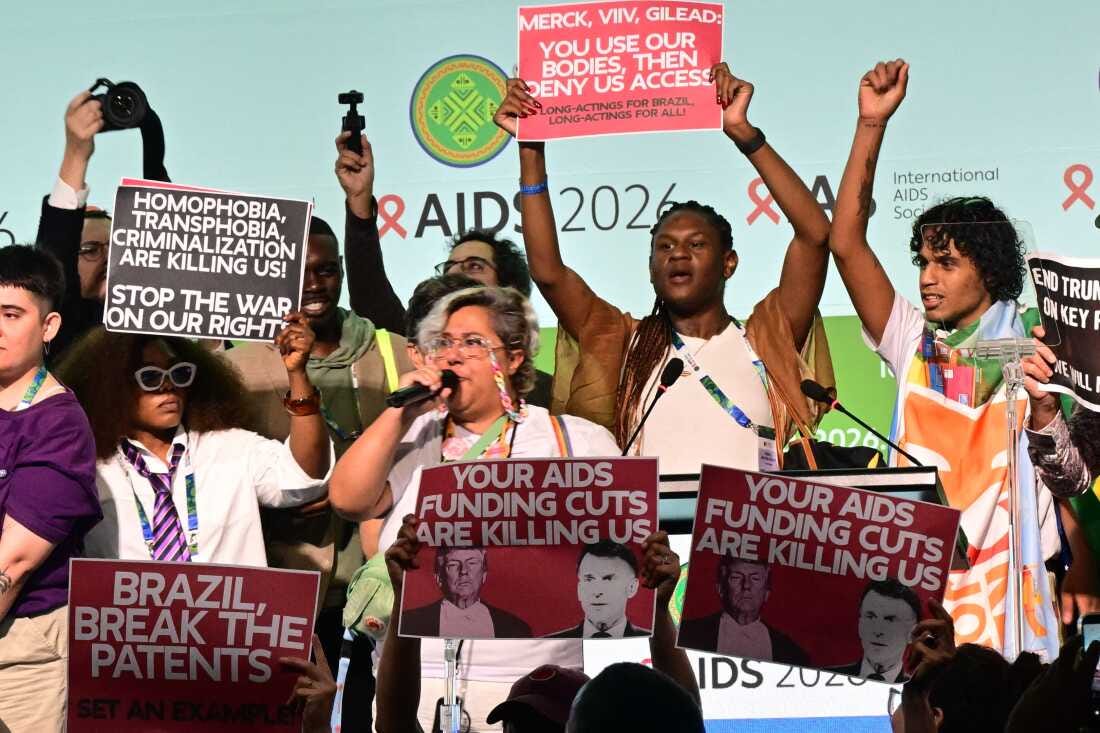
Access. On the badges, in the plenary titles, in the protest that stopped the opening ceremony. I lost count somewhere around Tuesday.
Padilha said it best and he said it first. Innovation without access is not innovation, it’s an injustice. Tedros and Byanyima went after Gilead from the same stage. I was a few rows back thinking good, finally, now somebody says the next part.
Nobody said the next part.
So I did. I’d brought data from a Kasha study across ten Kenyan counties on what people will actually pay for HIV treatment and prevention, and I raised it on a panel, at a funder dinner, with anyone who stood still long enough.
It didn’t go well. Not hostile, nobody was rude, people were lovely about it. They just didn’t want it on the table, and you can feel a room decide to talk about something else.
I understand the reflex. Ask about paying in a week like that and it sounds like you’ve joined the other side. But access is a money word. Somebody buys the product. Somebody pays to move it. Somebody pays the nurse who puts it in her arm. We can decide who that somebody is, or we can leave it and find out.
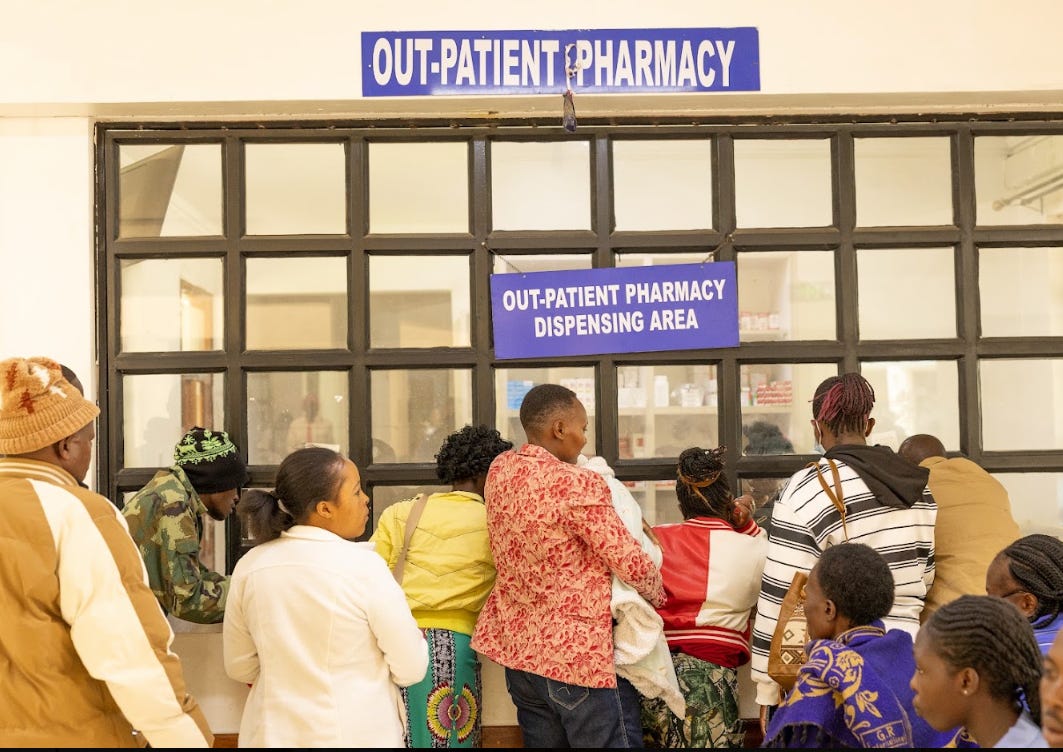
And people are already paying. Taxi fare. A morning of trading lost. Four hours in a queue. The risk of being seen walking through a clinic gate in a town where everyone knows what that gate is for. None of it shows up in a budget anywhere, all of it is why people stop coming, and when they stop we write it up as poor adherence and put it on the patient.
That’s the argument I couldn’t get anyone to have. Here’s the one the conference had instead, which turned out to be the same argument wearing different clothes.
The gap
Every prevention session I sat in opened with a product and closed with a systems problem. Every single one. By Wednesday I’d stopped taking notes on the science and started taking notes on the questions from the floor, because that’s where the week actually was.
Raphy Landovitz put it plainly in one of the big plenaries. The barriers in front of us aren’t mainly scientific anymore. They’re political and operational, and whether we deliver these tools with any speed or fairness is a decision being made right now, mostly by people who don’t come to HIV conferences.
The financing news landed on day one. UNAIDS and KFF both released at the opening. Global HIV funding fell in 2025, driven entirely by the US collapse. 1.2 million new acquisitions. 570,000 deaths. New acquisitions climbing again in Brazil, Pakistan, the Philippines, Madagascar. Read the two reports together and you get a response under more strain than at any point since 2002.
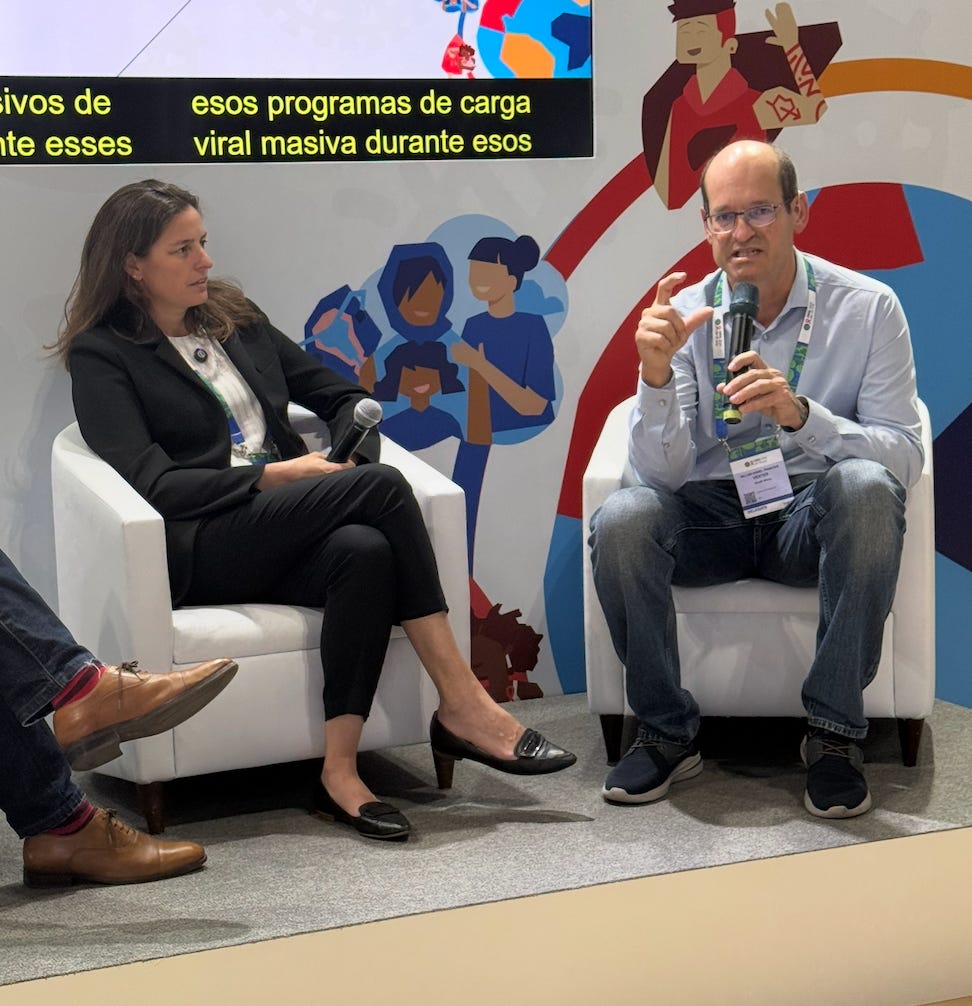
Then Francois Venter said the systems to move prevention to tens of millions of people don’t exist. Just said it, in a mini panel on viral load monitoring, on a Thursday morning, to about forty people.
I’ve been saying a quieter version of that in South African rooms for two years and getting nowhere with it. It helps to hear it said loudly by someone the room already listens to. It also stings slightly, which I’ll get over.
Mitchell Warren gave Bhekisisa the South African version. The constraint on a growing lenacapavir programme won’t be supply, it’ll be infrastructure. Half a million people needing a test and an injection every six months. Then a million. Can the system hold that.
What six weeks in South Africa actually tell us
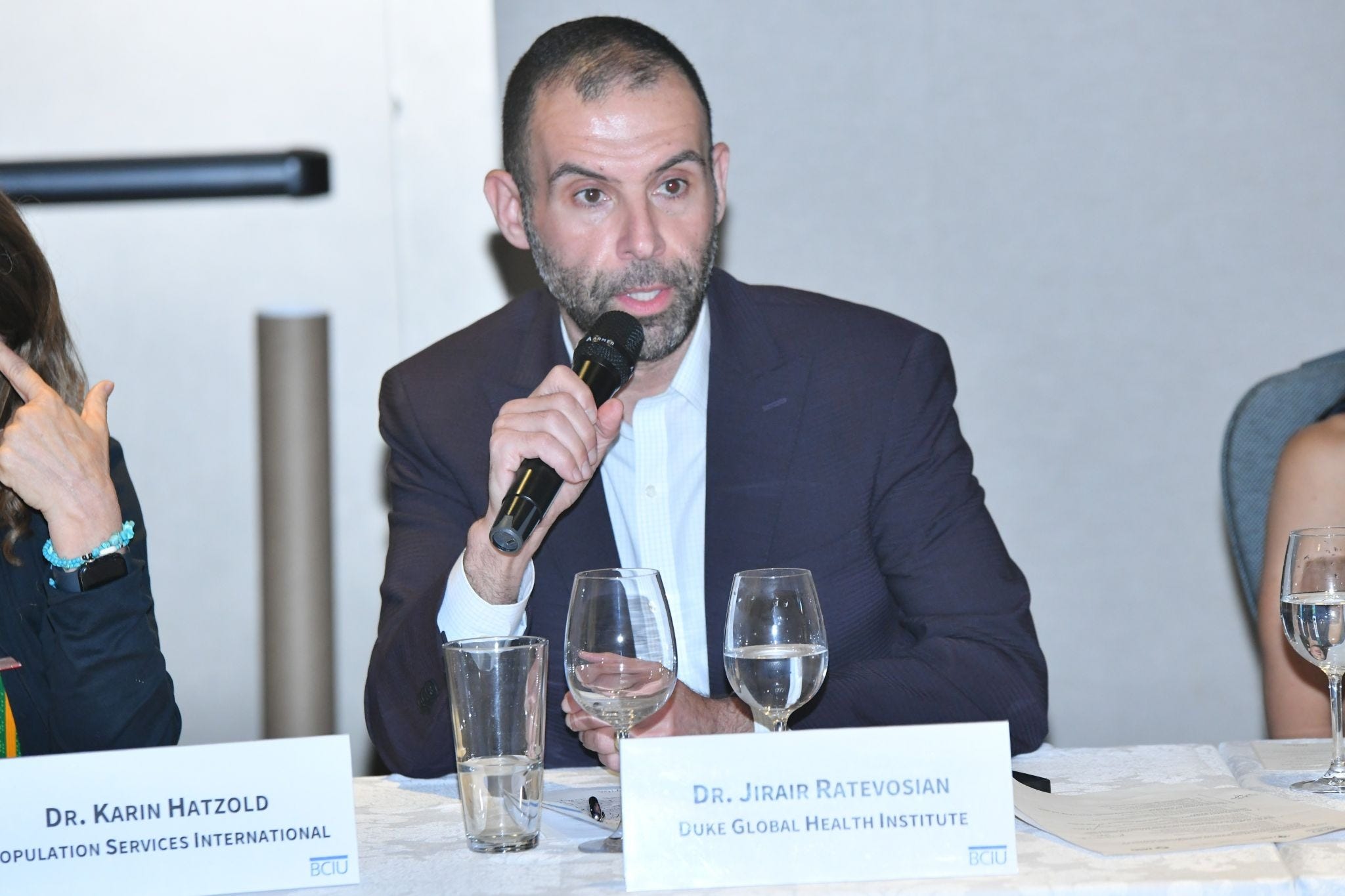
The national numbers have been covered well. Bhekisisa went through the health department’s first six weeks and Jirair Ratevosian wrote them up for a global audience. 31,297 of roughly 60,000 lenacapavir users across African national programmes are South African, so just over half. Of people offered a choice, 98.5% took the injection. Around a third had never used prevention medicine before. Go and read both, they’re better than my summary.
Hold that 98.5% loosely. It’s a national dashboard, and nurses may simply be recording injections more carefully than pills. The real gap is probably narrower.
None of that is the number I want anyway.
The number I want is retention, and South Africa can’t give it to me yet. Rollout started 5 June. Six months later is 6 December. Everything anyone has published so far is a count of people who started.
One study gives us an early look. LEN4PrEP, run by Saiqa Mullick at Wits RHI across two Tshwane government clinics and a mobile unit, has been going since November and is fully enrolled at 1,544 participants. Of the small number who’ve reached their six-month appointment, 85% came back on time. Zambia and Eswatini started around the same time and I’m told they’re seeing something similar, though I haven’t found those numbers published anywhere I can send you.
Tiny denominators. Still the most important figure anyone has.
And the window is tight. Come back more than two weeks after your six-month date and you need four lenacapavir tablets alongside the injection to get your levels back inside three days. So a late patient is a stock problem and a counselling problem landing on the same clinic desk on the same morning.
The behavioural data from LEN4PrEP is more interesting than the dashboard because it’s measured rather than counted at a till. 88% of participants chose the injection over the pill, up from 80% when the study started. Ten points below the national figure, which tells you something about the national figure. About 58% had never used prevention medicine before, against roughly a third nationally, so the study is reaching younger women and women less attached to a clinic.
Men are the finding that delights me, even though I’m disappointed about key populations and I’ll come to that. Nationally men are 28% of lenacapavir users, and 93.6% of the men offered a choice took the injection. Historical male participation in prevention products sits around 10%. Men have been the hardest group in South African prevention for fifteen years and something about this product went straight through that wall.
Mullick’s reading is the one I keep repeating to people. They’re choosing it because it’s easier to live with. Fewer visits, nothing daily to remember or to hide from somebody. That’s a delivery finding dressed up as a preference finding. Reduce what collection costs a person and they turn up.
The people the numbers are missing
In South Africa’s first six weeks, lenacapavir reached 705 sex workers, 419 gay and bisexual men, 31 transgender people and 33 people who inject drugs.
Out of more than 31,000.
Those are the populations with the highest incidence in the country, and the likeliest explanation is that the clinics built to serve them shut when their US funding was terminated.
Micheal Ighodaro presented an oral abstract in Rio forecasting long-acting PrEP need for key populations out to 2030. Before the conference, GBGMC published a brief on the disappearance of key populations, on how PEPFAR data rollbacks are making the programming invisible. People stop appearing in the data. Then they stop appearing in the targets. Then they’re not in the budget, the service closes, and nobody has to be seen deciding anything.
South Africa’s rollout is that argument turning up six weeks early, in a country with no PEPFAR data problem at all. The product is free. The public clinics are open and stocked. The people who needed it most weren’t standing in them, because the places they trusted were the places that closed.
A breakthrough that only reaches people through facilities stops at the facility door.
Micheal sought asylum from Nigeria, spent nine years at AVAC, gave a plenary in Durban in 2016. In a year when naming gay men in African programming costs more than it used to, he keeps naming them.
Demedicalising the last mile
The strongest theme of the week was demedicalisation, whether or not people called it a delivery agenda. It is one.
Kenya has pharmacists initiating and refilling PrEP without a doctor. Brazil is testing dispensing machines in transit hubs so you can collect without anyone watching. MISTR does consultation and home delivery in the US. Community-led programmes in South Africa and Thailand deliver into the places key populations already are.
None of that lowers the clinical standard. It removes steps that cost a person a morning and add nothing medically.
Wawira Nyagah built a whole satellite around one question. If a young advocate walked into a clinic tomorrow and asked for lenacapavir, could he get it? Then she traced every place the answer breaks. Is it registered. What does it cost. Did the government prioritise it. Is there a generic. Does the nurse look at him with contempt when he explains why he wants it.
Best teaching device I saw all week, because it won’t let access stay abstract.
What Rio didn’t resolve is all operational. Who can test, prescribe, administer, dispense. How community providers get paid. How public, private and community data connect without leaking. How you hold quality and continuation when the volume is national instead of pilot-sized. No country has a blueprint for that yet, and every country introducing a long-acting product needs one inside a year.
The pipeline is about to make this harder
ViiV brought real-world Apretude data, early work on a formulation that could take dosing from six injections a year down to three, and a comparison of how people experienced cabotegravir versus lenacapavir injections. That last one is the study I’d put in front of any programme manager, because comfort drives continuation and continuation is the whole game.
Merck, MSD outside the US and Canada, signed seven royalty-free voluntary licences for alimatravir, its once-monthly oral pill, covering 129 countries, while Phase 3 is still enrolling. Three licensees are in South Africa, Uganda and Kenya. First time African manufacturers have been in an initial licence for an HIV product, which is genuinely new and deserves the credit it got.
It also leaves out most of Latin America, including countries running the trials. Which is the old pattern. You help make the evidence, you wait for the benefit. ITPC made the point better than any panel did, with a display that cast PrEP as a luxury item available in the right markets only.
Now line the pipeline up. Daily pill. Monthly pill. Two-monthly injection. Three-times-yearly injection. Twice-yearly injection.
Five cadences, five supply rhythms, five recall schedules, five counselling conversations, and one nurse.
Choice is the right goal. It’s also an operations project nobody has costed.
Communities are delivery infrastructure
Community-led monitoring, peer-led testing, community delivery of treatment and prevention, digital outreach built around how young people actually live. The programme was full of it. If you file that under soft, you’ve misread where it sits. It’s the part of the network that reaches people facilities don’t.
Yvette Raphael made the political case before the conference had formally opened, telling senior US officials that South Africa is part of Africa and won’t be divided and ruled. She chaired the PURPOSE 1 global community accountability group, which is a large part of why the lenacapavir trial was built around African women and why the result is trusted here. In the Global Village her team ran a youth-led session with advocates from Zambia, Rwanda and South Africa. That’s succession planning, and nobody writes it into a proposal.
Adaobi Lisa Olisa made the upstream case at AVAC’s long-acting satellite. Bring communities in at the start of product development. Before protocols, before launch plans. She’s Nigerian, a pharmacist, a board member at Root to Rise, and before that a technical officer at FHI 360 on MOSAIC doing knowledge management and MEL in Nigeria and co-leading youth engagement across ten countries. So when she says community input should shape a protocol, she’s read the protocol.
Funding cuts hit this layer hardest. amfAR has the numbers. Those 419 gay and bisexual men are what that damage looks like from the delivery end.
AI, and the same scale problem
Izukanji Sikazwe gave the first AI plenary and spent it letting the air out rather than pumping it in. We’ve been using AI-adjacent tools for decades, she said. Spectrum models supporting planning in more than 170 countries. Consumption-based supply chain forecasting. We just didn’t call it that.
Her target was pilotitis. The endless cycle of promising pilots that never turn into programmes. A tool that works for 200 patients with a dedicated research team tells you very little about an overstretched clinic on a Tuesday afternoon.
Scale is where real impact lives, she said. The Global Fund now puts about $150 million a year into digital tools across more than 90 countries.
mike Reid brought the evidence underneath that from the Lancet Global Health Commission on AI and HIV. Hundreds of promising pilots, almost no national deployment. That gap isn’t a technology problem.
Worth saying that Sikazwe, Reid and Solange Baptiste are on that commission together, so this isn’t three people independently arriving at the same conclusion. It’s a group who’ve been working on it, which is arguably better.
Audere Africa made it concrete. Aimee, a WhatsApp AI companion in South Africa, reached more than 9,300 adolescent girls and young women, and 45% of the ones who engaged went on to test, start PrEP, or both. A second analysis found structured risk prompts got complete assessments 67% of the time against 6% when the user drove the conversation. So the fix is conversation design, which costs nothing in model size.
Sikazwe was just as clear on the risk. Scale AI without governance and you’ll reproduce every inequity this response has spent forty years fighting. Baptiste wants a community governance layer built in at the start rather than bolted on after something breaks.
The State Department’s AI-generated map of Africa, every country mislabelled, OpenAI watermark still on it, is what no governance layer looks like when nobody checks the output before it hits a screen.
What I am taking home
Retention is the metric and almost nobody has it yet. Uptake is easy, and already excellent, and not the point. The second injection and the third are what decide whether this changes an epidemic. Mullick is at 85% on small numbers in Tshwane. South Africa answers on 6 December. I’d push every funder to ask for that number and refuse an initiation count in its place.
Choice grows the market and complicates the warehouse. Offering the injection brought new people in rather than shifting existing users across, which should shape how every country plans monthly oral PrEP on top of lenacapavir. And somebody needs to work out what five parallel cadences do to a supply chain and to one nurse’s day.
Delivery is the constraint, and it isn’t a facility problem. The people missing from those first six weeks are missing because the organisations that reached them closed. Products move through networks. We’ve been dismantling the network while celebrating the product.
That’s what we do at Kasha. Nine countries, and a delivery network that goes to the person rather than asking her to find us. Our Johannesburg pilot is running 98.9% first-attempt delivery, 39 minutes door to door, 94% retention. Take the collection burden off someone and she stays. It’s not complicated, it’s just unglamorous, and it doesn’t get a plenary.
The last flight
I met Josélia Mbanze in an airport queue.
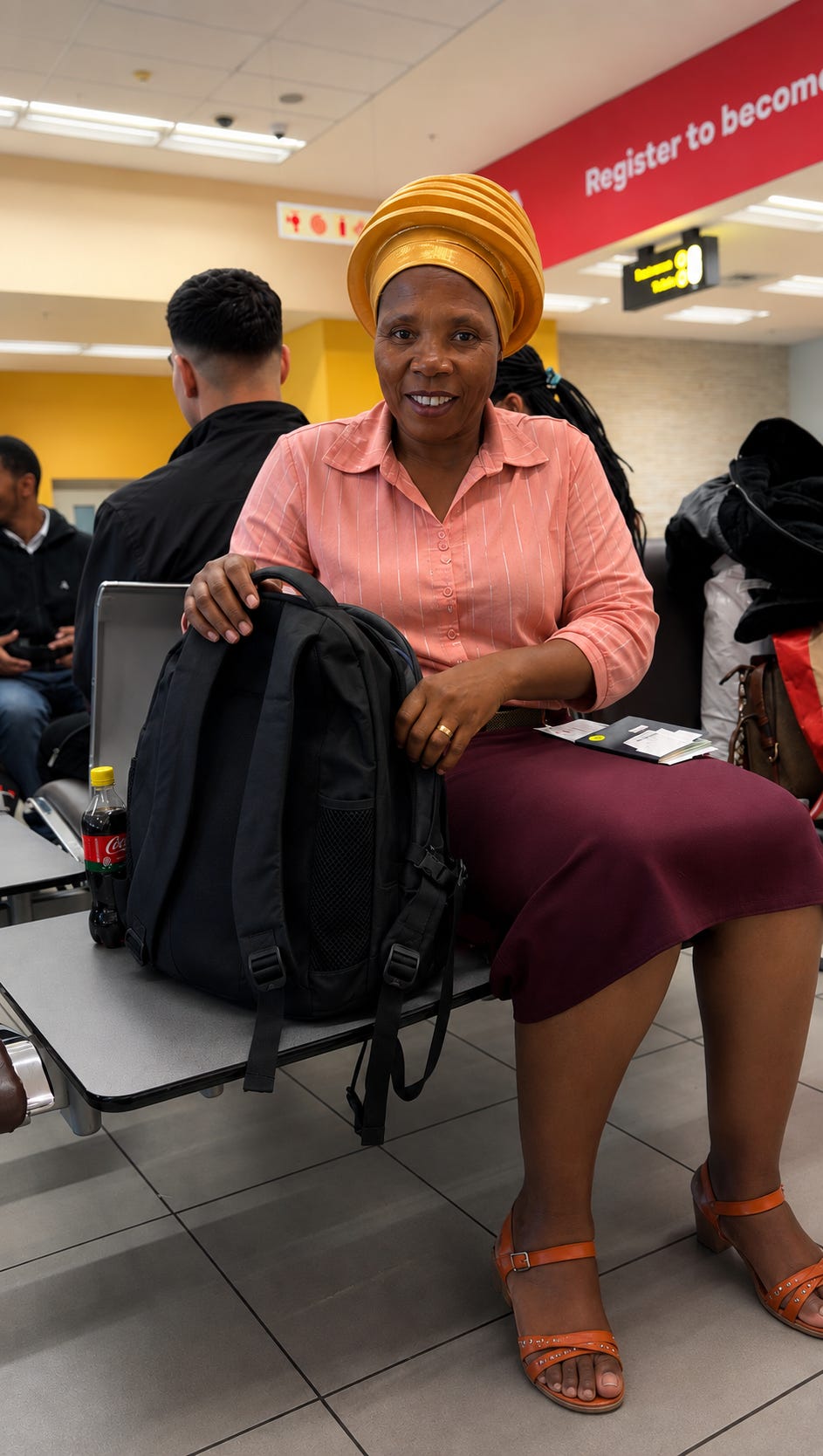
She runs Kuyakana, Mozambique’s national network of women and girls living with HIV. Twenty women founded it in Maputo in 2000, each of them naming her status publicly when that still cost you something. They work on prevention, on sexual and reproductive rights, and on the economic independence that decides whether a young woman has any choice to make in the first place. Their motto is saber para reagir. Know in order to act.
We flew Rio to São Paulo to Cape Town to Johannesburg together. The first leg went late and we ran, twice, through airports neither of us was built for at the end of a conference week. She navigated in Portuguese. I offered the little Tsonga I have. Somewhere over the Atlantic it occurred to me that we were carrying the same argument in two languages and neither of us had been asked to give a plenary about it.
I left her in Johannesburg with one flight still to go, heading home to Maputo, where the work is measured in whether an adolescent girl can reach a service, be treated decently when she gets there, and come back in six months.
That’s the whole thing. The product exists and the person exists, and between them is a distance somebody has to cover. Twice a year, every year, for as long as she needs it.
Rio spent a week on the product. Josélia spent her last night in an airport queue, going back to the distance. She was at work on Monday.
So were we.
#AIDS2026 #HIVPrevention #LastMile #GlobalHealth
Jirair Ratevosian’s account of the six stories that mattered at AIDS 2026 is worth your time, as is Bhekisisa’s analysis of South Africa’s first rollout data.
Great Article Skye. Always inspires me the passion you show on this topic. I am particularly interested in the AI initiatives you talk about. We should continue the discussion to see which of these we can bring to Kasha.